DataCops vs Osano
Osano sells a no-fine guarantee. DataCops sells the architecture that means you never need one.
A no-fine guarantee is a marketing instrument, not a technical one. What actually prevents a fine is correct technical implementation: the consent signal passing through to your ad pixels, geo-routing working, and the analytics signal surviving the trip. DataCops is first-party consent and analytics infrastructure that runs on your own subdomain, filters bots at ingestion, and separates your data into two tiers at the source. Different category, not a cheaper version of the same thing.
Start FreeA consent platform that talks to your data stack
Most CMPs stop at the banner. DataCops wires consent state directly into your analytics, CAPI, and CRM pipelines - automatically.

One platform that captures, verifies, and activates - instead of patching three tools together.
You are insuring the wrong risk.
GDPR and CCPA enforcement actions cluster around a short list of technical failures. Ad pixels firing before consent. Consent signals not passing through to the tools that need them. Analytics collecting identifiable data without a lawful basis. Geo-routing that sends EU data where it should not go. The fines come from implementation defects in the data flow. A no-fine guarantee does not fix that. It pays you after a regulator finds it. Correct architecture prevents it.
What the gap actually looks like
A CMP loads as a JavaScript file from the vendor's CDN. uBlock Origin, Brave's shield, and AdGuard all carry filter lists that target known CMP script patterns. So in high-blocker EU markets, 30 to 40 percent of your visitors have a browser that blocks the consent banner before it renders. No banner. No prompt. No consent signal. And on single-page-app navigation, the banner script and your analytics tags race each other, so a tag can fire before the consent gate is even ready.
Reject All does not mean no data. Anonymous, non-identifying session analytics are lawful under GDPR with or without consent. Most CMPs throw that lawful data away anyway, because they treat consent as one on-off switch instead of two separate tiers. Cookieless analytics is an EU legal hack, not a global solution: it buys GDPR breathing room and solves nothing else.
Of the analytics events that do get through, a large share are not human. Across audited traffic, 25 to 35 percent of analytics events get blocked outright, and of what survives, 24 to 31 percent is bot activity. PillarlabAI ran an internal honeypot on its own signup flow: 3,000 signups arrived, 77 percent were fraudulent, and 650 separate accounts traced back to a single device fingerprint. Every one of those bot sessions also clicked through a consent banner and got forwarded to Meta and Google as a conversion signal. The CMP did its job perfectly. A no-fine guarantee would never have flagged a thing.
How DataCops fixes Osano's gap
DataCops runs on your own subdomain instead of as a third-party CDN script, which makes it far more resilient to the ad-blocker and privacy-browser blocking that silently kills 30 to 40 percent of CDN-hosted banners. It runs two separated data tiers from the source: anonymous session analytics flow unconditionally because they are lawful, and identifiable data is gated behind consent. The split happens before data leaves your infrastructure.
Bot filtering happens at ingestion against a 361.8 billion-plus IP database, so contaminated events never reach your analytics or your CAPI feed. It pushes server-side conversions to Meta, Google, TikTok, and LinkedIn, and SignUp Cops adds identity intelligence at the signup point. The argument is that you do not need a payout if the architecture prevents the failure in the first place.
Honest limitations: DataCops is a newer brand than Osano, and SOC 2 Type II is in progress, not complete. A heavily regulated buyer with a hard SOC 2 procurement gate may need to wait. The shared-CAPI capability is in verification, not fully live. DataCops surfaces fraud context, it does not block fraud as a binary guarantee. And there is no no-fine guarantee, because the argument is architectural prevention, not insurance after the fact.
Swap your CMP in an afternoon
Drop in the DataCops banner, migrate purposes, and Consent Mode v2 lights up automatically.

Add the Tracking Script and Validate
Paste this into your website's <head> tag:
<script src="https://datacops.yourdomain.com/core.js"></script>Point Your DNS to DataCops
Add one CNAME record:
Live in 5-30 minutes. Complete data capture begins automatically.
Integration
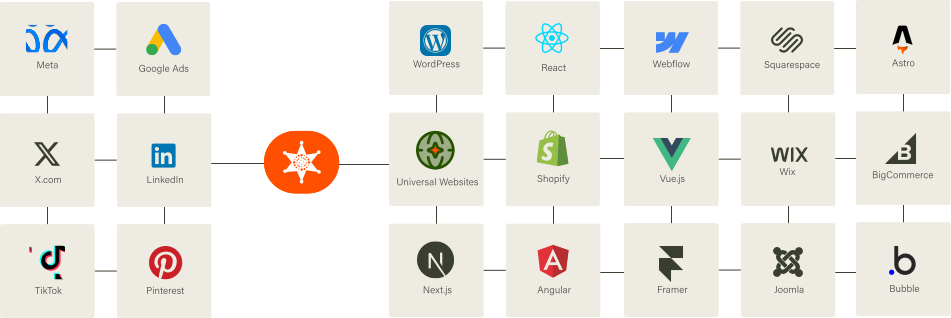
Our Script almost works flawlessly with any website framework to collect analytics data in a more accurate manner!
FAQ
Yes. DataCops ships with a full TCF 2.2-certified CMP registered with IAB Europe. It handles Global Privacy Control, Apple Privacy Signals, US-state opt-outs (CCPA, CPRA, CTDPA, VCDPA, and more), and plugs directly into Google Consent Mode v2 and Meta's consent framework.